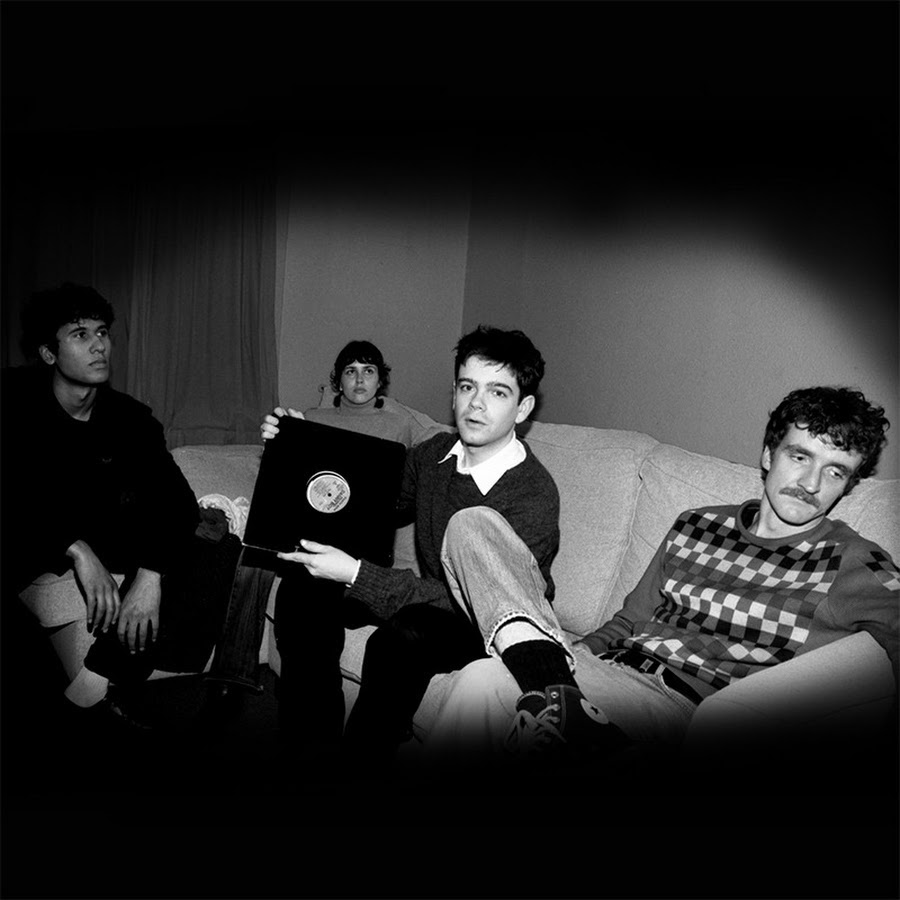
Early in your career, being a punk band is easy. It’s easy to get angry at the world you’ve been given, to want to make it better, and to one-up your parents. But to get older, to see decades go by and to continue to fight, innovate, and persist — that’s the real punk rebellion. Gogol Bordello has been fighting since their debut in 1999, and now, with their ninth studio album, We Mean It, Man!, they continue to mean it.
We Mean It, Man! is mostly a continuation of the band’s previous albums and stylistic choices. Gogol Bordello (Gogol after the Ukrainian-born Russian author, Bordello after the Italian word for brothel) is an American punk band comprising members originating from all over the world. Their lead singer, Eugene Hütz, assembles and reassembles an ensemble comprising traditional Eastern European folk musicians and traditional punk instrumentation. They released their debut album, Voi-La Intruder, in 1999, and have moved from record label to record label before founding their own, Casa Gogol Records, in 2023.
Their newest album, We Mean It, Man!, includes 1980s-era synth elements that are a first for the band, replacing the fiddle, accordion solos, and fills that they typically feature. The synths are a mixed bag; on some songs (“From Boyarka to Boyaca,” “We Did Good With The Good We Did”), they provide a welcome solo or accompaniment that highlights the group’s incredible ability to include different types of instruments and genres. However, on other tracks, such as the titular song “We Mean It, Man!” and “Hater Liquidator,” I find myself wishing the band had stuck to their typical solo choices, as the synths cover the tight, frantic playing the band is capable of.
One of the tenants of Gogol Bordello’s songwriting is a pro-immigrant resilience. On their 2010 album Trans-Continental Hustle, in the song “Immigraniada (We Comin’ Rougher),” they chant, “Immigrada, immigraniada / We’re coming rougher every time / In corridors full of tear gas … Flushed down the bureaucratic drain / But if you give me the invitation / To hear the bells of freedom chime / To hell with your double standards.”
Hütz himself is an immigrant to the U.S. He was born in Boyarka, Ukraine, making his first guitar, distortion pedal, and drum kit at age 14 from plywood, radio parts, and metal fish cans. After being displaced by the Chernobyl nuclear disaster, he and his family spent seven years in different refugee camps across Europe and eventually moved to Vermont when he was 20. Hütz later moved to Brazil, and Gogol Bordello has been relentlessly touring the world since their inception in the 1990s.
Hütz’s genius is in his ability to combine and reform traditions without losing what makes them traditions. Gogol Bordello is, at face value, a combination of Eastern European folk music with punk music. It is worth pointing out these genres have very similar themes to begin with, such as anti-establishment beliefs and a desire for worker-centric reform. We Mean It, Man! features “Solidarity (Nick Launay Mix),” remix of Hütz’s rewrite of the 1976 Polish protest song “Let Poland Be Poland.” Hütz changed the lyrics to support the Ukrainian people after the most recent Russian invasion.
Gogol Bordello’s pro-immigrant and pro-diversity stance extends to every facet of the band. With Casa Gogol Records, they are producing who they believe to be the next wave of punk music. We Mean It, Man! has two songs that feature Casa Gogol Records members, “Boiling Point” with Grace Bergere and “From Boyarka to Boyaca” with Puzzled Panther. Both songs make use of Gogol Bordello’s typical fanfare, while catering to what makes each artist special and unique.
While they look forward, they also look back. In addition to Hütz pulling from folk traditions ranging from tarantas to union chants, he also employs various music legends throughout the Gogol Bordello discography. The version of “Solidarity” seen on We Mean It, Man! features New Order member Bernard Sumner, formerly of Joy Division, and is mixed by punk rock producer Nick Launay.
With these features and the band mainstays, We Mean It, Man! encompasses three generations of genre-pushing musicians. We see a generational passing of the torch, assuring us that music will continue and that it is possible to stay resilient as an aging punk. We hear too often from older generations that music was better back in their day, that the punk attitude was more authentic. Through Hütz, we see a vision for how the world could be: people, seemingly separated by age, background, and lived experience, coming together to create something new and beautiful and exciting.
For those interested in exploring Gogol Bordello’s discography, Super Taranta! is, in my opinion, the band’s most solid and consistent album. It was rereleased in 2022 with an alternative cover and more songs to raise money and awareness for the Russian invasion of Ukraine.
While We Mean It, Man! is not a perfect album — and, for Gogol Bordello especially, is pretty lackluster — it is proof of the tenacity and elasticity of the band. Even nearly 30 years after their founding and several lineup changes, they are still able to push boundaries and buttons. They refuse to be complacent. They live what they preach.