

For double-degree third-year Ma’ayan Kertcher, burnout is an ongoing challenge.
“I feel like burnout is something I frequently experience, especially as a dual-degree student,” she said. “It’s hard to balance the academics, the music, and also having time for myself and the people around me.”
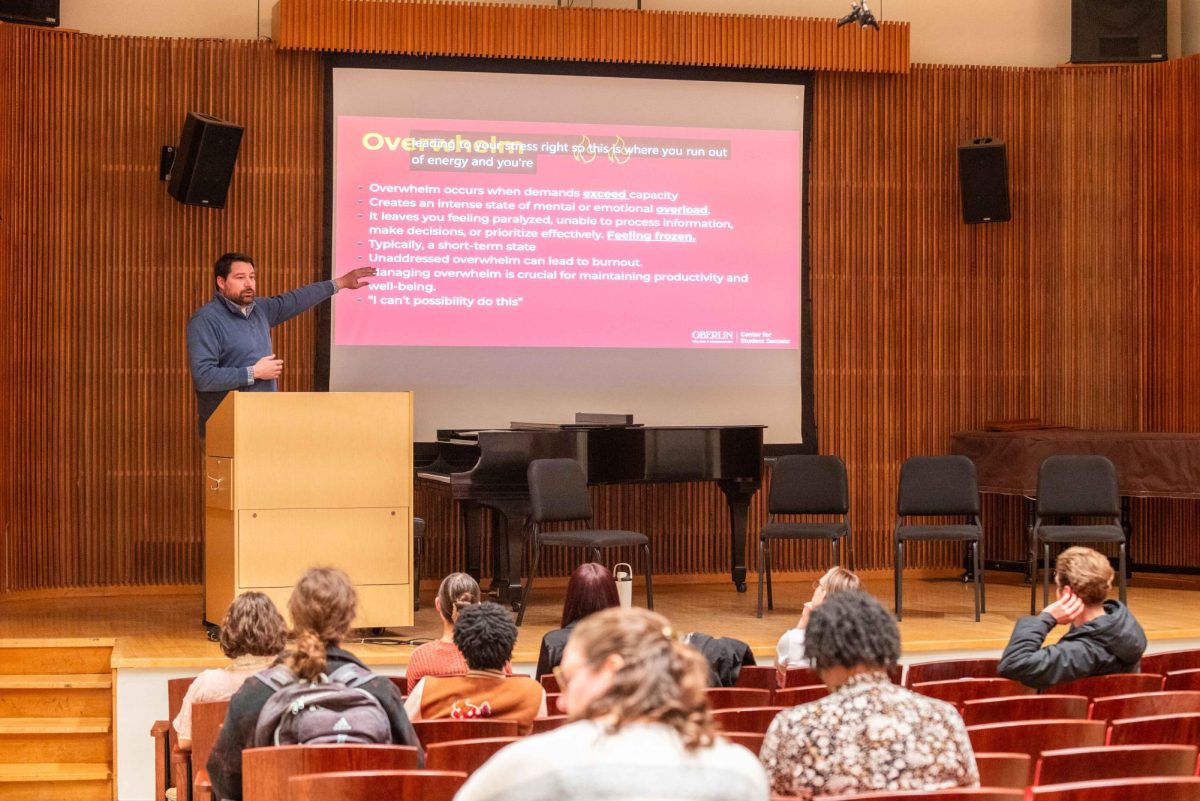
Kertcher is not the only student feeling the pressures of her daily workload. She was one of many gathered in Kulas Recital Hall on Wednesday to address a growing concern: how does one deal with burnout, particularly within the Conservatory? Fusing personal storytelling, student panel discussion, and resource sharing, the event acknowledged the persistence of burnout in a college environment while also introducing ways to build sustainable habits and support systems. Furthermore, it framed burnout not as an individual failure, but as a shared and addressable challenge within Conservatory culture.
Opening the workshop, Associate Dean for Student Academic Affairs Leah Brockman reflected on her personal experience as an overworked orchestral member. Dean Brockman described burnout as a state of deep mental, physical, and emotional exhaustion induced by prolonged stress, one that is extremely difficult to recognize in the initial stages. Starting as stress, leading to overwhelm, and culminating in burnout, opening speakers emphasized the importance of early recognition and intervention within this continuum.
Following the opening faculty remarks, student panelists offered candid accounts of navigating intense schedules, high expectations, and the pressure to excel artistically and academically. Many voiced how overcommitment diminishes both performance quality and personal well-being, leaving little room for rest.
For Conservatory third-year cellist Dylan Bachmann, burnout prevention comes down to intentional balance. “I will go outside, experience nature, and have a healthy work-life balance — spend more time with loved ones,” he said, emphasizing the importance of stepping away from a mentality requiring constant productivity.
Other students highlighted how burnout often stems from structural and cultural pressures within Conservatory life. Double- degree third-year Caroline Kratz, a member of the student panel, spoke about her involvement with the workshop and her relationship with campus resources. After struggling as a first-year student, Kratz sought support through the Center for Student Success, where she developed foundational habits for maintaining wellbeing. For her, Student Success counseling helped remind her to take time for habits paramount to her wellbeing and health.
“Eating enough, getting water, sleeping — those were things I really had to learn,” she said. She added that the panel aimed to increase awareness of available resources, particularly within the Conservatory, where such support can feel even less visible.
Panelists also emphasized practical strategies for managing burnout, including careful scheduling, journaling, and incorporating restorative activities into daily routines. These approaches, students noted, can help maintain both productivity and personal fulfillment.
A key takeaway from the session was the importance of awareness, both of one’s own levels and of the resources available. Students were introduced to tools such as self-assessment surveys and reflection exercises designed to help identify early signs of burnout and plan the next steps.
The role of community support also emerged as a central theme. Organizers highlighted resources such as success coaches, counseling services, and peer wellness ambassadors, encouraging students to seek help before reaching a crisis point. The workshop concluded with students filling out personal “commitment cards,” outlining specific strategies they plan to use in managing burnout moving forward.
Despite the challenges of college life, Kertcher found the workshop reassuring. Hearing faculty and peers speak openly about their experiences helped normalize what can often feel isolating.
“It was helpful to hear it broken down and to hear other people’s experiences,” she said. “I felt less alone, and it seemed like there was a way to receive help.”
Ultimately, the event underscored a shared reality at Oberlin: burnout is common, but it is not inevitable. Through fostering awareness, prioritizing self-care, and strengthening community connections, students and faculty alike are working toward a healthier, more sustainable campus culture.

