

This review contains spoilers for The Drama.
After being disappointed by its teasers, I was positive that Kristoffer Borgli’s The Drama — which I had been so awaiting so expectantly — would wind up being just another of the many uninspired releases that blemish A24’s output, which has produced some truly incredible films. Walking out of the theater, though, I was pleasantly surprised to find myself having experienced a film that far exceeded my expectations.
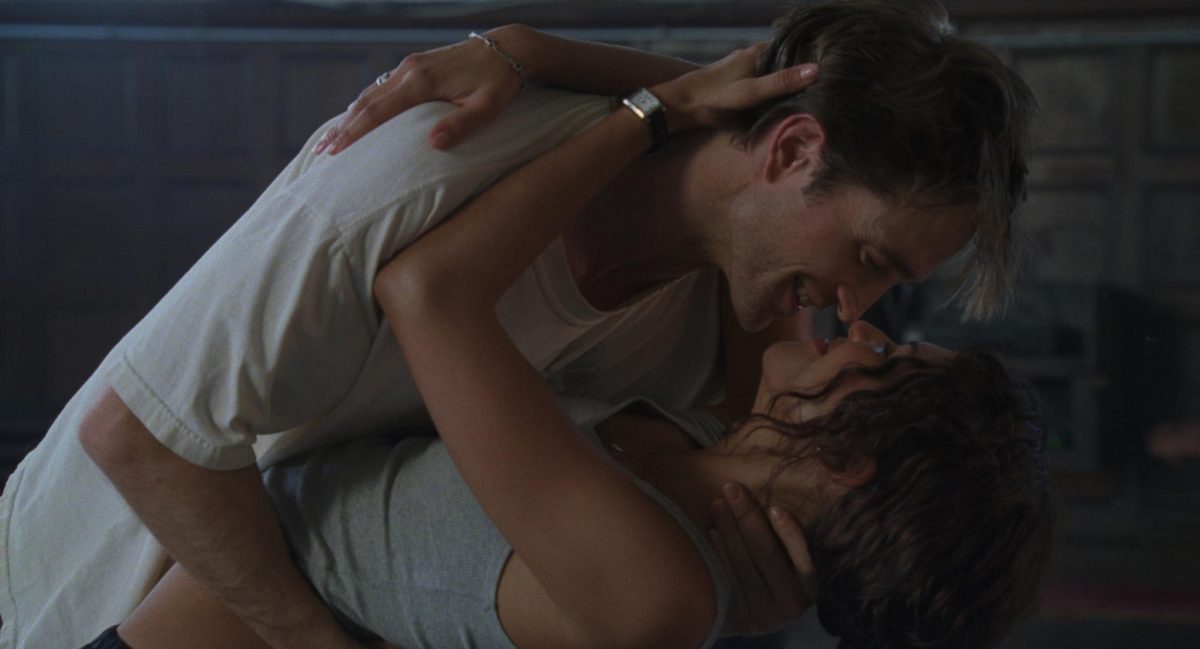
The film starts off entirely innocuous: Emma (Zendaya) and Charlie (Robert Pattinson) are two Boston-dwelling 30-somethings whose wedding day is rapidly approaching. They appear to be the picture of healthy domesticity, just another sweet couple living their best life in a slightly high-rise apartment. He’s gentle and accommodating; she’s empathetic and knows just how to calm him down during customary fits of stress. Sappy — uninspired — but cute.
All of that quickly changes, however, when Emma makes a shocking revelation during a drunken game of “What’s the worst thing you’ve ever done?” that not only horrifies Charlie and Emma’s friends Rachel (Alana Haim) and Nick (Mamoudou Athie), but threatens to draw their wedding to a sudden, grinding halt. She confesses that, in her first year of high school, she planned a mass shooting — having gone so far as to bring her father’s rifle with her to school one fateful morning — but never actually went through with it. It’s such a sharp deviation from the movie’s cheesy introduction that one would be hard-pressed to find a showing where all of the heat isn’t suddenly sucked out of the room, just as it is on-screen.
It’s obviously a very contentious premise. There’s no need to delve too deeply into how sensitive a subject gun violence is in the United States, particularly in schools, or how the Gun Violence Archive calculates that nearly 100 mass shootings have occurred across the country in 2026 alone. It’s a very bold play for Borgli to include something so divisive, of which many are victims every single day, as such a focal point in what is, above all, a comedy.
I actually found Emma’s characterization very interesting in regard to this conversation. Though the film shies away from defining a particular illness or specific traumatic occurrence as the root cause of her behavior — a decision I found both surprisingly sensible but quite safe — she explains how she’d become embroiled in a pro-gun, all-American internet subculture that reassured her unhealthy mindset. It’s easy to find cantankerous Jordyn Curet a little silly decked out in military gear and stereotypically edgy makeup playing a younger version of Emma, but I found that added to the film’s depiction of her downward spiral; it’s a ridiculous portrayal of a ridiculous online culture that would naturally seem ludicrous to anyone not involved in it — brainwashed by it, as Emma was.
It raises an interesting discussion of how childhood experiences that could be easily manageable with even a basic support system — moving away and infrequent bullying at school, in Emma’s case — can be extremely exacerbated by neglect. It’s easy for the internet to become an echo chamber; when you find your niche, you surround yourself with people who like the same things you do, agree with everything you say, praise you, and appear to love you. With how easily-accessible taboo material is online, supplementing or outright replacing one’s real social life with a digital one can get dangerous quickly. Having never seen it depicted so explicitly before, I actually quite appreciated this chosen avenue.
Still, I would argue that the film doesn’t go far enough. There’s potential in Borgli’s inversion of the stereotypical white, male, “sociopathic” school shooter, but he doesn’t really do anything with that; Emma is only coincidentally Black, a reality that generates a massive blind spot when Borgli fails to engage critically with the way Emma’s identity as a woman and a Black person (particularly in the South, where it’s mentioned she grew up) could have on her wellbeing and the way that impact is handled by the people around her — part of the reason that I found the lack of exploration of her psychological landscape, again, rather irresponsible.
Frustrating too was Emma’s lack of presence; she is by far the film’s most fascinating character, but it feels as though we spend very little meaningful time with her alone. Though Pattinson is fantastic as per usual, hilarious while subtly unsettling as the well-meaning Charlie, Borgli spends far too much of the movie’s relatively brief runtime away from Emma for how provocative the discussion her character forces is.
Can people really change? Is the thought of sinning truly as bad as committing the sin itself? Admittedly, the film is good at laying out the impossibility of resolving this dilemma. It also managed to strike a pretty good balance between its grave subject matter and its nature as a dark comedy; though oscillation between the two was occasionally jarring, I didn’t find it to ever make light of any sensitive issues in and of themselves. I can understand, however, why some might find the film’s basis for its main plot point upsetting or offensive.
Ultimately, I had a great time. Zendaya was just as good as Pattinson, and the film sports some truly amazing bits; there’s a particular sequence about two-thirds of the way through where Charlie comes to a breaking point that had me laughing the hardest that I have at a movie in a long while. Daniel Pemberton’s score is fantastic, something that can be a make-or-break for me personally.
It’s messy, but its highs are undeniable. Overall, The Drama offers some interesting food for thought despite its overall discussion lacking in refinement. If nothing else, it will certainly be remembered as bold.


