I can picture exactly how I want my time at Oberlin to end. Just after commencement, my family will walk across Tappan Square to get a late lunch. The emotion of leaving will finally hit me, and I’ll ask the others to give me a moment. As they walk on, I’ll try to get my bearings amid what will assuredly be a raging storm of emotion. Ennui will cut through the soft butter of my heart like a vile, hot, sweaty knife.
Suddenly, out of the corner of my eye, I’ll see a little flicker of white fur. Quickly, I’ll whip my head around to see two beady red eyes staring back. Yeobie. They will lean back on their hind legs, tail standing at attention. Just like that scene at the end of Wes Anderson’s Fantastic Mr. Fox, I will raise my fist in salute. They will return the gesture, their little but mighty paw raised high to honor all I’ve accomplished. Then they’ll dart away, off to squirrel away another acorn.
Unfortunately, despite the entirely plausible nature of this scenario, as conditions stand, it is not very likely. Simply not enough Yeobies are on campus to ensure that one is available for me at commencement.
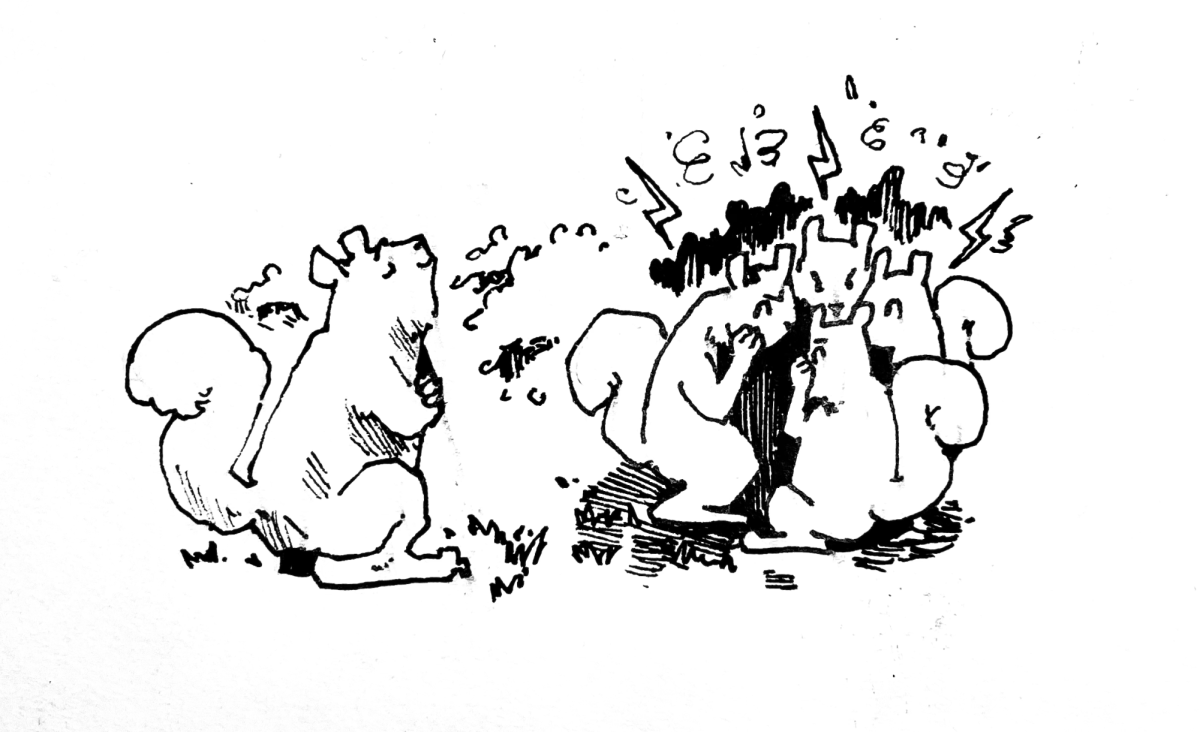
An impromptu survey of the Review office revealed a general consensus of at least one, maybe two albino squirrels on campus. I will henceforth refer to albino squirrels as ‘Yeobies.’ This number was once higher. According to a 2020 Review article, there were several albinos running around Oberlin around 2010 (“Oberlin Loves Its White Squirrels,” The Oberlin Review, Nov. 13, 2020). A City resident quoted in the article said that “in the ’70s and ’80s — they were all over Tappan Square back then.” Unfortunately, natural selection is not on the albino gene’s side. A squirrel needs to inherit the gene from both of its parents to be a Yeobie. Otherwise, it will just look like any other squirrel. Biology’s decree is clear. Oberlin is at real risk of losing its Yeobies.
There is at least one hybrid squirrel running around. They’ve got a beautiful pale tail, and I had a delightful run-in with them last week. As a fellow product of interracial marriage myself, I appreciate this Hybie’s — as I’ve christened them — presence on campus. Sadly, Hybie’s no replacement for the real McCoy. The real SquirrelCoy, if you will.
This campus needs the real SquirrelCoy. Yeobie is a part of us, and we are a part of them. What are Oberlin students if not the albino squirrels of American collegiate life? I’ve decorated a Yeobie plush and plastered Yeobie stickers all over my laptop. I even attended Yeobie’s b’mitzvah put on by Hillel earlier this fall. Oberlin is blessed to have such a physical connection to its mascot. Unlike the multitudes of lions, tigers, and other big cats that plague NCAA games, our college actually has real-life mascots that students can come across. These run-ins are one of the highlights of life at Oberlin. To see our fluffy nonbinary monarch nibble on a nut brings pride and joy to the hearts of all Obies. We have a responsibility to make sure the next generation can feel this joy as well.
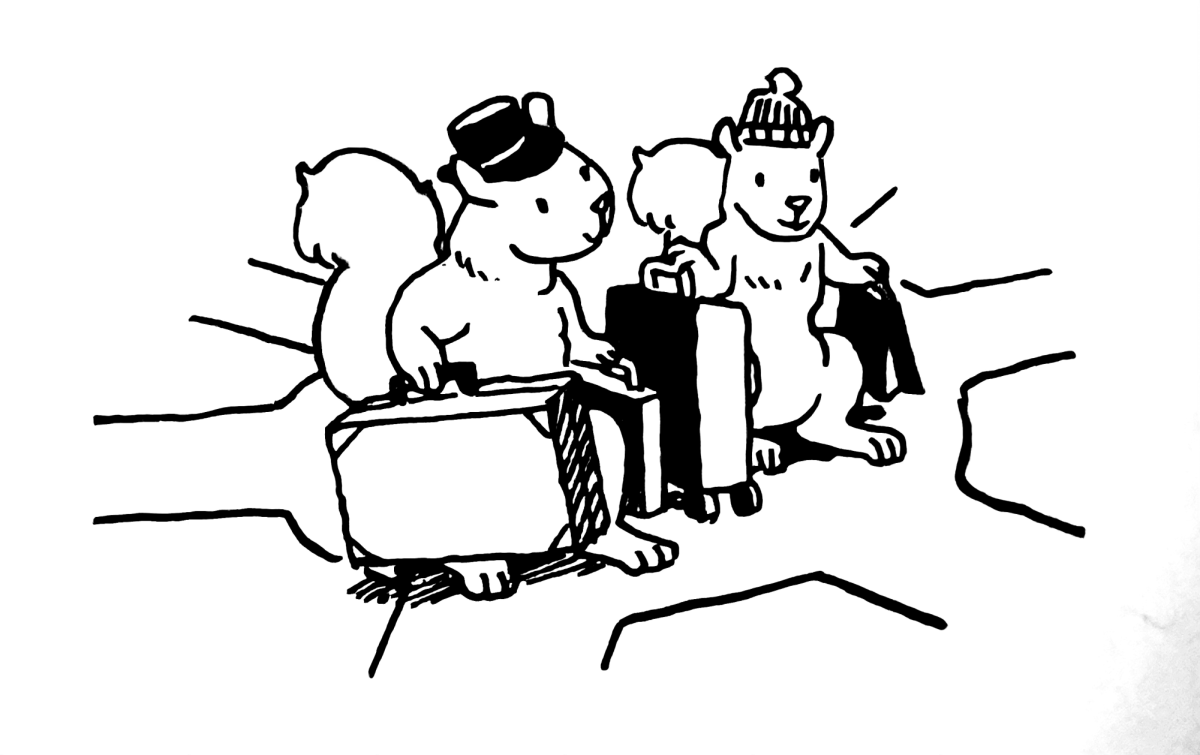
The solution to our Darwinian problem is obvious. Oberlin College and Conservatory must import two to three albino squirrels to release around town. Though that may feel like a small number, it is the ideal addition. The number of Yeobie sightings ought to be increased, but we mustn’t cheapen such a sacred experience through proliferation. Two or three squirrels won’t deluge the town. Rather, they will slightly increase the odds of meeting Yeobie. This is huge. Every single moment spent with Yeobie substantially improves one’s God-given right to the pursuit of happiness.
President Carmen Twillie Ambar, do not be deterred. Let cold rationality and logic lead you to the warm and fuzzy choice. Also, before you pick out an ethical albino squirrel trader, please remember to make sure that the Yeobies are a mixed bag, gender-wise. A couple Yeobie kits would well complement all the baby Hybies and Yeobies who would result from this sage decision.