About a month ago, The Oberlin Review published an article titled “Oberlin Students Crave the Rave: Steps We Should Take to Improve the Party Scene of Oberlin College” (The Oberlin Review, March 13, 2026). The author outlined many ways in which the campus party scene can improve: better communication between party organizers, more infrastructure within party spaces, and, most importantly, the introduction of rave culture. While I agree that Oberlin partygoers may enjoy the inclusive atmosphere and queer love that comes with the rave philosophy PLUR (Peace Love Unity Respect), we likely cannot take the “rave” much further than that. Oberlin does not have the space, organization, or frankly, the interest needed to drastically expand our party scene. Our culture is built on functions in co-op basements and small off-campus houses. Even if there were a way to organize bigger crowds and longer parties, I doubt that the student community would feel the desire to sustain those changes.
Nobody should expect a large, vibrant party scene when they come to a school like Oberlin. The college ranking site Niche, which compiles thousands of student reviews, dubs Oberlin a “C+” party school. Oberlin is surrounded by larger, less costly Ohio schools with “A+” party rankings, like The Ohio State University, the University of Dayton, the University of Cincinnati, and Ohio University. In short, if a student were truly seeking a vibrant party scene as a core aspect of their college experience, they have many other — cheaper — schools to choose from. The demand for parties is fairly lax at Oberlin, as College first-year Nora Lindsay-Reilly observed.
“If you really wanted to party, you could find something, but that [isn’t] the main goal of the campus,” Lindsay-Reilly said.
While Oberlin does sustain a consistent and fairly lively party scene between co-ops and sports houses, we can assume that these traditional types of parties are not a high priority for most students. This type of culture makes for small crowds and, subsequently, small venues. Despite the complaint in “Oberlin Students Crave the Rave” that parties are overcrowded and restrained by small spaces, Harkness Party Coordinator and College second-year Zoe Stern observes the opposite issue.
“If anything, we’ve [not] been having enough people,” Stern said. “Sometimes we close off part of the space so that it doesn’t seem way too big.”
Party organizers’ tactic of limiting space creates an artificial sense that parties are overfull and capable of expanding, as the author suggests. Co-op basements and house living rooms, while sometimes crowded, match the general demand for party spaces. Anything larger leads to sparse crowds. We saw this issue during last semester’s Solarity concert, where a moderately-sized crowd toward the front of the stage left massive portions of Heisman Club Field House barren and empty.
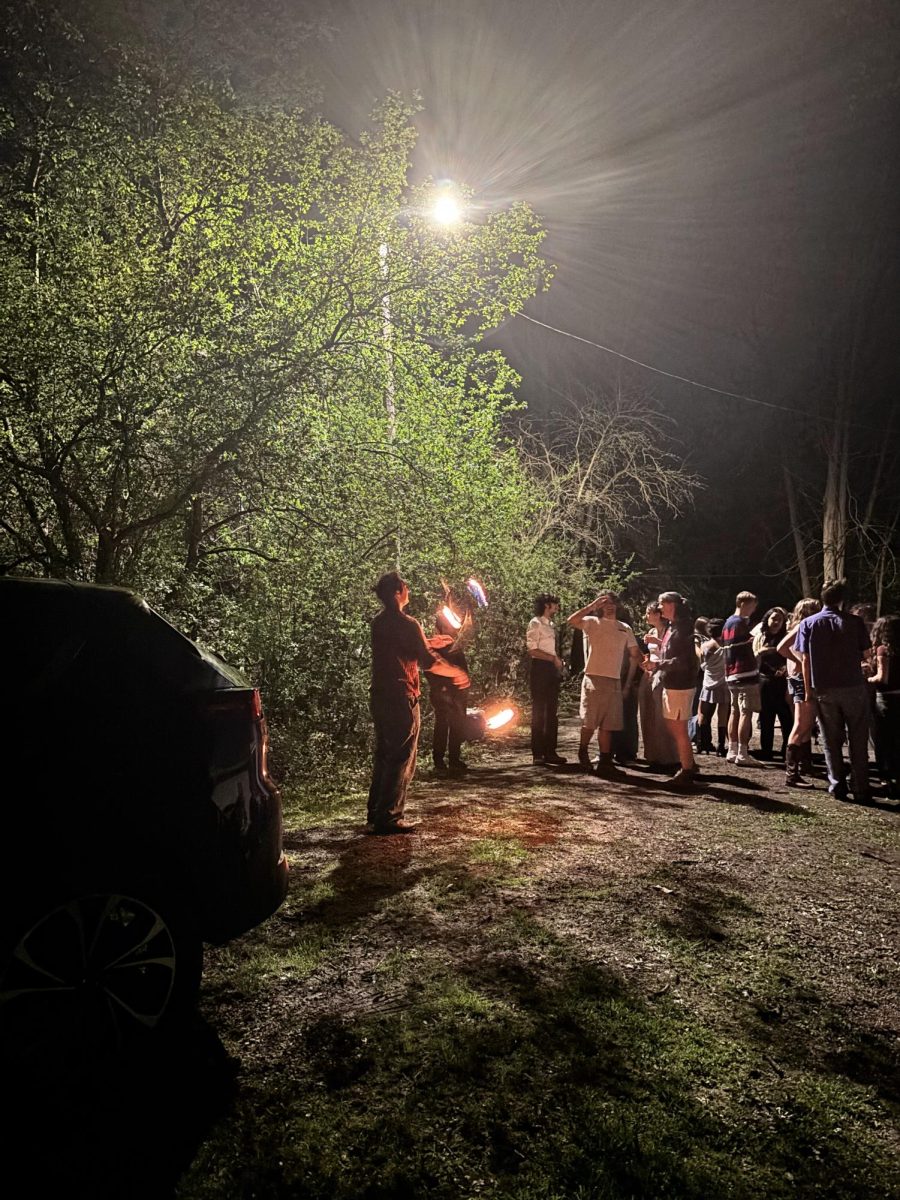
Raves are massive, all-night parties, traditionally held in abandoned warehouses. If we cannot fill a field house for the biggest on-campus concert of the year, we cannot expect any larger turnout for a proper rave. Furthermore, the proposal for rave culture neglects the fact that Oberlin doesn’t have any warehouses or massive venues to throw a loud, all-night function. The town of Oberlin is small, rural, and very quiet. We’re surrounded by neighborhoods of families and retirees. Any party thrown in a large enough space, like an outdoor area, would likely get shut down within a few hours.
That is not to say, however, that Oberlin’s social scene is dull or wanting. The school’s alternative events and traditions, like the Jellyfish Parade, Dandelion Romp, and “liquor treat,” draw larger crowds than a typical weekend party. As Lindsay-Reilly points out, the music scene drives many other social functions, which are often preferable to basement parties.
“I really like Cover Band … a lot of concerts at the Cat and The ’Sco are integral parts of my Oberlin experience,” Lindsay-Reilly said. “We are so lucky to have so many artists come through and also student artists who want to play for us and share their art. I think that’s just something that you can’t replicate elsewhere.”
I do not mean to claim that Oberlin’s party scene cannot be improved. I agree with the original author’s argument that functions across campus are ill-coordinated and inconsistent. Party coordinators seem to share the same concern and are working to remedy the issue.
“We actually made a group chat of different people who organized parties within OSCA,” Stern said. “And obviously [coordinating is] hard, because people announce events at different times … but we’ve definitely been trying to address that.”
Our party scene has evolved to match the interests of the community it serves. Though some students may “crave the rave,” I don’t believe they can garner enough interest to make such a drastic change to Oberlin culture. Party coordinators put an immense amount of effort into organizing events, recruiting musicians, and drawing up a crowd. Instead of yearning for bigger, wilder events, we should pay attention to the improvements that coordinators can realistically pursue: full crowds, exciting music, and cohesion between functions across campus.