

Brand-new dorm, new semester, and finally — her new album. We pressed play. “Oh boy…” — she’s back.
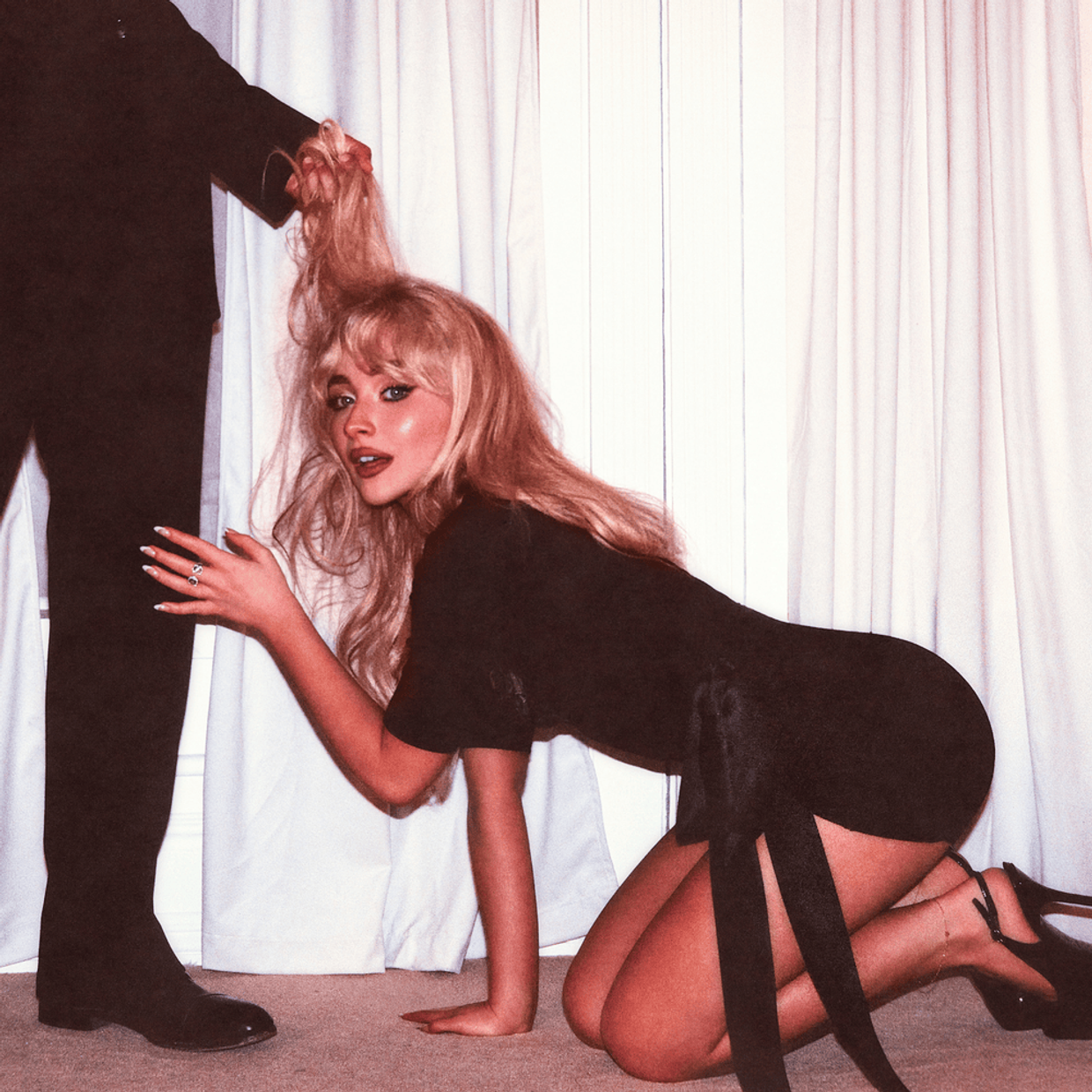
My friends and I were sitting on the second floor of Woodland Hall, crowded around a mini speaker at exactly midnight on August 29 when we launched into Sabrina Carpenter’s new record, Man’s Best Friend. The 12-track album, released on Island Records, is just as witty and playful — and calculated — as the title suggests. Some audiences, including those reacting to the album’s controversial cover, have jumped to conclusions about the kinds of statements Carpenter is making on feminine romance and sexuality. As soon as the album starts, however, it becomes clear that nothing about this album is as simple as they might have hoped.
“Manchild,” the album’s first single, took listeners by storm when it surfaced as Carpenter’s first song to debut at number one on Billboard’s Hot 100. One thing’s for certain — Carpenter hasn’t strayed too far from the poppy charm of her previous works. She’s still just as tongue-in-cheek as she was on her last album, Short n’ Sweet.
Once the fourth track, “Sugar Talking,” begins, it’s abundantly clear that any potentially boring moment is filled with a brain-scratching addition from the synths and tasteful beat drops. It’s fitting, then, that this is one of the first songs in which individual lines are emphasized by a pause in the music or an especially colorful chord. “Yeah, your paragraphs mean s**t to me / Get your sorry ass to mine” hits every time.
Carpenter has also continued to prove herself a master of many forms; she can be accusatory, pissed, and playful. It’s on songs like “Don’t Worry I’ll Make You Worry” where the shift from her fast pace and upbeat pop anthems is more stark than ever. The contemporary influences surrounding her writing process are clear, especially on this track. The melody on every “I’ll make you worry like no other girl can” is almost exactly the same as Clairo’s “Bags.” Chappell Roan’s influence is present as well — the heavy reverb of every chorus is reminiscent of a low-energy ballad off of The Rise and Fall of a Midwest Princess, so much so that you wouldn’t have been surprised if Roan herself was featured on the song.
But outside pop influences are only the beginning of Carpenter’s continuous commitment to her fans. Her ability to speak directly to her audience comes from the fact that universal confusion is the thing she understands most. Being “man’s best friend” can only last so long when the feeling of regret returns over and over again — when, as on “Nobody’s Son,” she sings, “There’s … not anyone left for me to believe in.”
The way she trusts her experience ends up reaching listeners with care and intention. She is able to express true sentiments of loss and doubt, but more importantly, her sexuality is never threatened by these admissions of failure. Romantic disappointment fuels every piercing and relatable line throughout the record. Still, by the second-to-last song she asks, “Do you want the house tour?” with unapologetic double meaning and no hesitation. She doesn’t feel threatened by her previous mistakes — only ready to face new ones.
This release is much more than a sequel to Short n’ Sweet, which propelled Carpenter into the pop queen status we’re familiar with today. The two albums definitely go hand in hand, and yet it feels like Carpenter has more to say this time around. This album takes us through a story; songs like “Never Getting Laid” and “Don’t Worry I’ll Make You Worry” go together as a warning to the guys she’s not letting get away so easily. While critics of Carpenter’s messaging would argue that an album cover featuring a pop idol kneeling in front of a man holding a fistful of her hair doesn’t consider an audience of teenage girls as much as it should, the opposite is true. “A girl who knows her liquor is a girl who’s been dumped” on “Go Go Juice” hardly sounds triumphant. Carpenter isn’t proud of what she’s been through — only that she can empathize with (and caution against) those who may accidentally do the same. Man’s Best Friend ultimately implores all listeners — heartbreakers and heartbroken alike — to proceed with caution.


