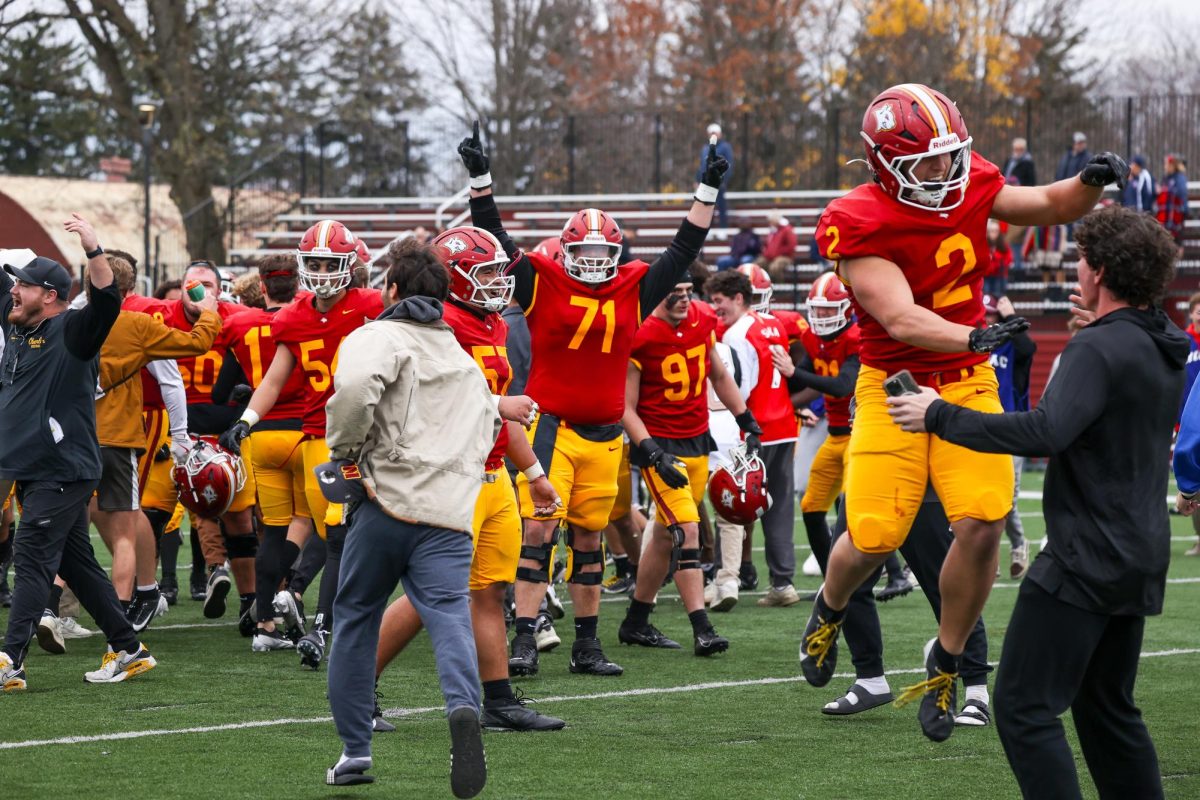
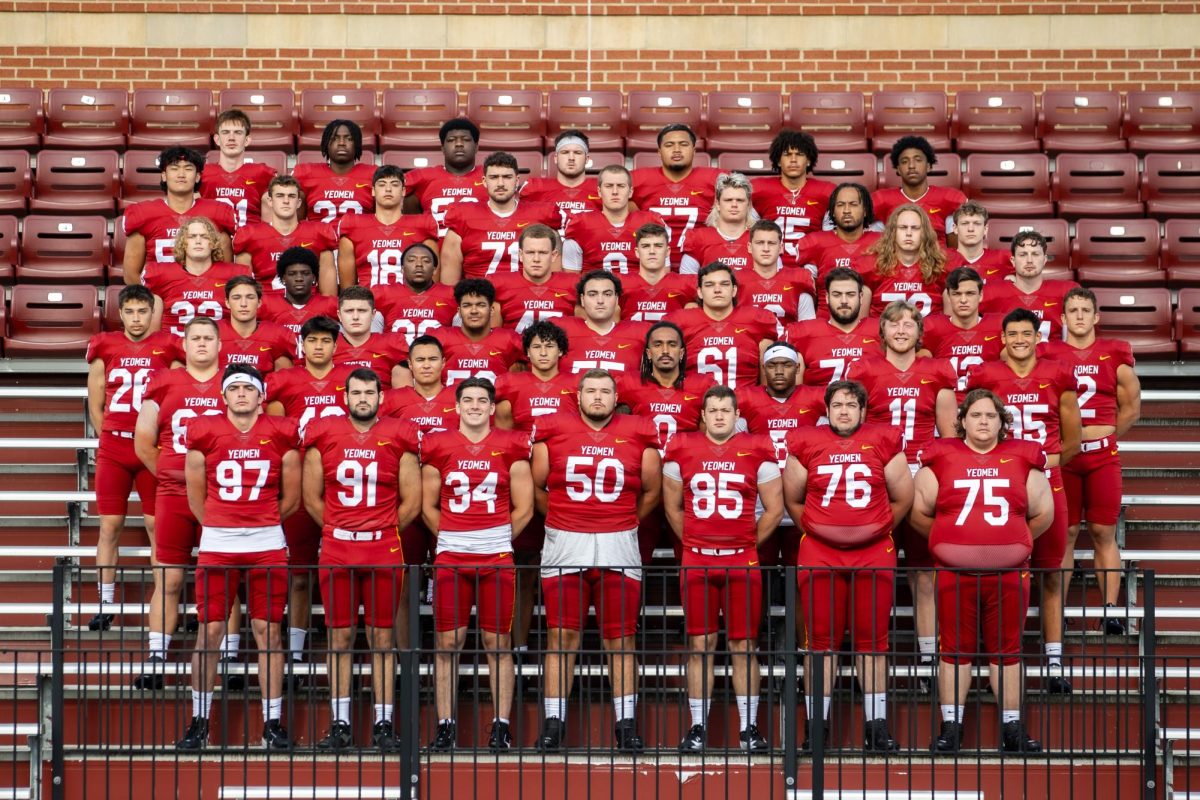
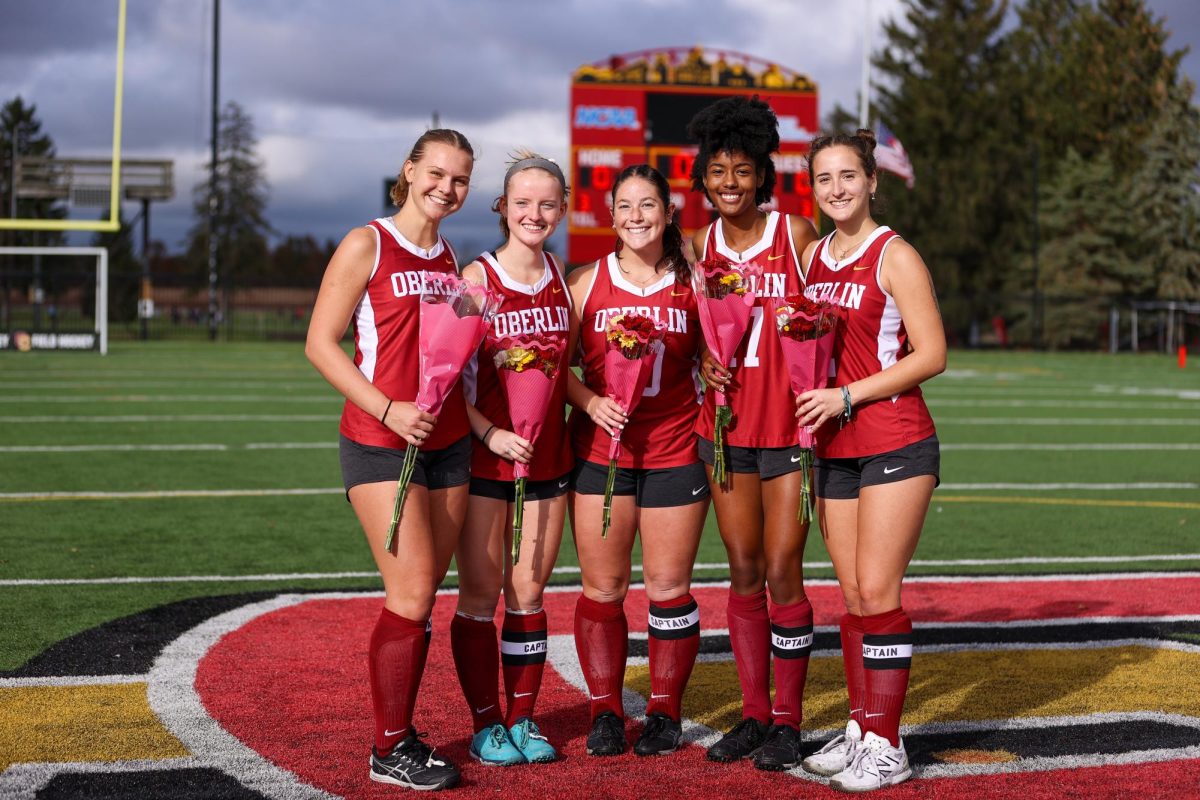
During the 2024 All in for Oberlin giving day, Oberlin College Athletics and the Heisman Club received 38 percent of the total donations made to the College. That’s nearly $600,000 raised — a figure that illustrates how Oberlin College athletics and football are some of the most well-funded entities on campus. The Heisman Club was created in 1978 to fundraise among Oberlin alumni and friends for athletics at the College and is named for John W. Heisman. Heisman was Oberlin football’s head coach in 1892 and 1894 and the namesake of college football’s most prestigious award, the Heisman Trophy.
This figure is hard to ignore — not just because of what it says about our donor base, but because it reveals the tension between who we are and what we pretend to be. We clearly value football as a fundraising vehicle. So why is the program rejected by this campus at large?
Oberlin’s football program has long been a lightning rod for criticism. The Yeomen have struggled on the field since the 1960s, often finding themselves at the bottom of the North Coast Athletic Conference standings.
Students and faculty often ask: Why do we even have a football team? The program has not enjoyed consistent success, doesn’t seem to align with the College’s institutional values, and the majority of students are, at best, indifferent — if not outright hostile — to the sport.
But maybe this is the wrong question.
If we want to talk about why Oberlin football “fails,” maybe we should consider what the team is up against. It’s easy to point to poor coaching and recruiting, but harder to look inward and realize that the cultural climate has made it virtually impossible to field a competitive team in the first place.
It’s not that the Midwest doesn’t produce talent. Ohio, Pennsylvania, and Michigan are football heaven, rich in talent and tradition. However, Oberlin predominately matriculates students who aren’t from Ohio and the surrounding states. In 2022, the College reported that only 19 percent of the student body hailed from the Midwest. This points to the homogenized coastal culture historically propagated by the school that alienates Midwest athletes seeking a sense of home.
Why would players choose a school where they’re viewed, at best, as an oddity, and at worst, as fundamentally incompatible with the institution’s values? Surely, a school full of self-professed outsiders can empathize with a team that is consistently the odd one out.
Oberlin wants the money football brings in but refuses to make the cultural and institutional concessions required to actually build a viable program. If the College wants football to succeed, it has to want football players to succeed. That means more than just scholarships or nice uniforms. It means real academic and advisory support for players who want to make sports, not academics, their priority. It means access to amenities and a dining program that supports the guys who take on 3-hour long, 5 a.m. practices. And it means promoting a campus culture that values their contributions instead of questioning their presence.
When we do get talented athletes — that is, when we manage to recruit standout first-years — most often, they leave. Why? Because they’re not just gutted on the field, they’re rejected as people. If not by the community, by the lack of institutional support. No one wants to stay where they’re not wanted.
Since its inception, Oberlin has proudly showcased a reputation for progressive politics, radical student activism, and resistance to mainstream American norms, which arguably include the cultural values tied up with football: traditional masculinity, regional pride, and oftentimes conservative social views. As we embraced co-ed dorms in 1970, rejected Greek life, and continued Oberlin’s legacy of activism, we also quietly sent a message to much of Middle America: this may not be the place for you.
This isn’t speculation — take a look at Oberlin’s overall retention data and the performance arc of the team. In 2021, the football team posted one of its best offensive seasons in a decade — during the COVID-19 pandemic, when recruits couldn’t visit campus. Once they began visiting again in 2022, the average points scored by Oberlin football plummeted by nearly 10 points. This correlates on-campus visits to tanking scores and a sky-high point differential. While these findings are only correlative, and there are other variables at play, the optics are clear: the recruits who didn’t visit campus scored more points.
The arrival of Head Coach John Pont in 2023 brought only a modest bump in recruiting — because football’s main issue isn’t coaching. It’s climate. These numbers suggest that the issue isn’t just that Oberlin football can’t recruit — it’s that Oberlin, as a whole, has made itself an unattractive destination for the very kind of students who would make the program thrive.
Oberlin wants the significant donations that its athletics program — including football — brings to the college. But both students and the institution as a whole don’t want to make the cultural concessions that are absolutely required to make football work here. We’re cultivating a social ecosystem that’s incompatible with what our donor base wants — a successful football team.
Football isn’t just a sport. At its best, it’s a community and a bridge to the surrounding area. Instead of just pretending to be a home for that at Oberlin, let’s actually try. Supporting football means more than just writing checks. It means building a campus culture where football players aren’t outsiders. And it means rethinking what inclusion really looks like.