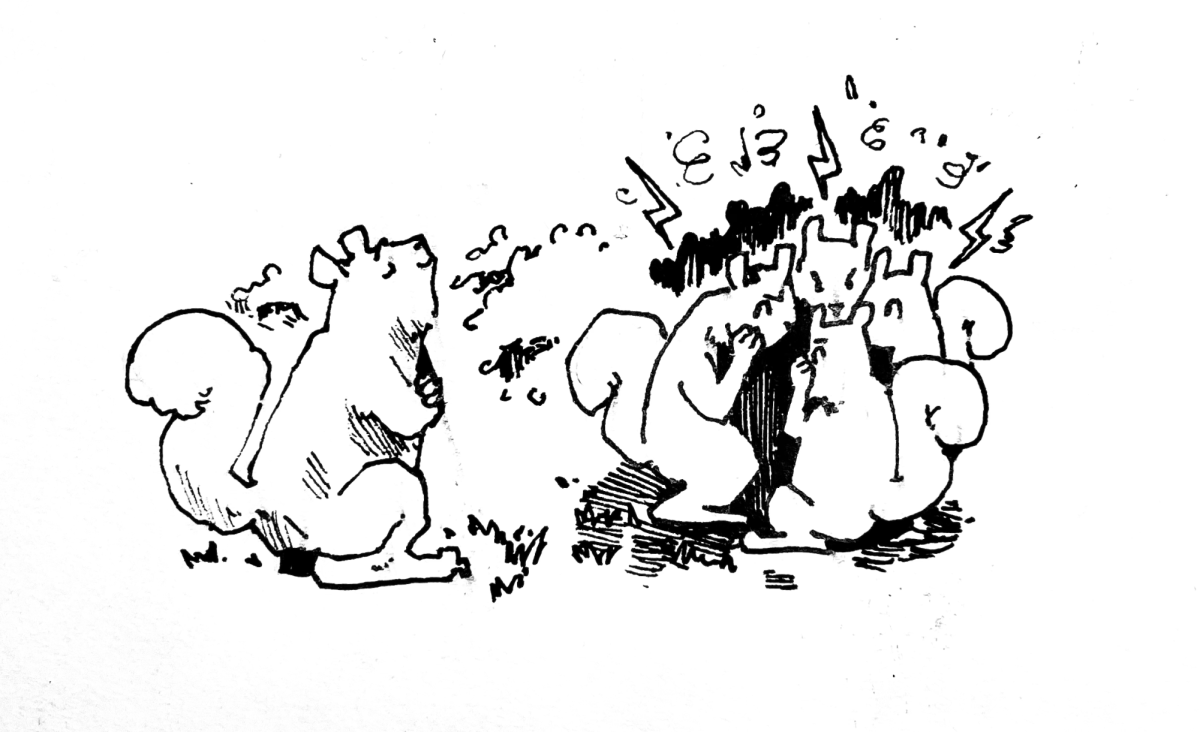
The filibuster is probably the funniest strategy in American congressional procedure. Consider how ridiculous the basic premise of a filibuster is. You can hold up the functioning of the government simply by deciding to never shut up. It doesn’t matter what you talk about. In 1935, Senator Huey Long gave a 15-hour speech in support of requiring senior appointees to the National Recovery Administration to be confirmed by the Senate. In order to fill space, he resorted to reading out a recipe for fried oysters. Filibusters can go on for a very, very long time. Strom Thurmond, whose 25-hour tirade against a 1950s civil rights law was, at the time, the longest filibuster in American history, reportedly visited the Senate steam room beforehand to avoid needing to use the bathroom.
Despite the obvious entertainment value that the filibuster provides, it is an antidemocratic tactic which, I argue, should be abolished. While it is true that senators have used the filibuster to prevent the passage of harmful laws, I believe that American politics would ultimately be in a better place without it.
Let’s begin with the obvious issue with the filibuster: It prevents a Senate majority from passing bills unless 60 senators are willing to vote to invoke cloture, a procedure that ends debate on a bill and forces a vote. These days, this means that you need a 60-person supermajority to pass almost any bill of consequence in the Senate. Even the threat of a filibuster can be enough to kill a bill, and these threats have been invoked more and more commonly in recent years. How often does one party get a 60-person supermajority in the Senate? It has only happend once since 1979.
This means that, if a majority party wants to pass a bill, they often have to convince several senators from the minority party to sign onto the bill. One might think that this would lead to better, more bipartisan policymaking. But in our age of political polarization, senators have an incentive to vote with their party: if they do not, they risk being seen as insufficiently loyal — consider the term ‘RINO,’ meaning ‘Republican In Name Only.’ They might even risk losing their office by being primaried. This means that very few bills actually get passed. Congress has been getting less productive for decades. It passes many fewer bills than it once did. This is bad for several reasons. It means that Congress is powerless to make substantive change. It’s also bad for the health of American democracy: People have to look to the executive and judicial branches of government for change. Trump’s efforts to expand executive power should therefore come as no surprise.
Abolishing the filibuster would reduce the ability of the minority party in the Senate to control what bills the majority party may pass. Democrats and Republicans have both argued for the preservation of the filibuster to allow the minority party to be able to check the excesses of the majority party. I am sympathetic to this argument. Liberal democracy is not synonymous with majoritarian rule; in fact, it relies upon the assurance of rights for political minorities. This is why, for instance, the Bill of Rights exists: Congress cannot pass a law abridging the freedom of speech without two-thirds of the House, two-thirds of the Senate, and three-fourths of the states all agreeing that the First Amendment should be undone. I also agree that American democracy is in a fragile state, and I will concede that removing the filibuster without ensuring that there are adequate safeguards in place for political minorities could be playing with fire.
But whether you lean left or right politically, the filibuster will be used to prevent legislation you care about from getting passed. Either both you and your political opponents get to pass laws, or neither you nor your opponents can get anything done. Right now, Congress can’t get anything done. We should at least consider the alternative.