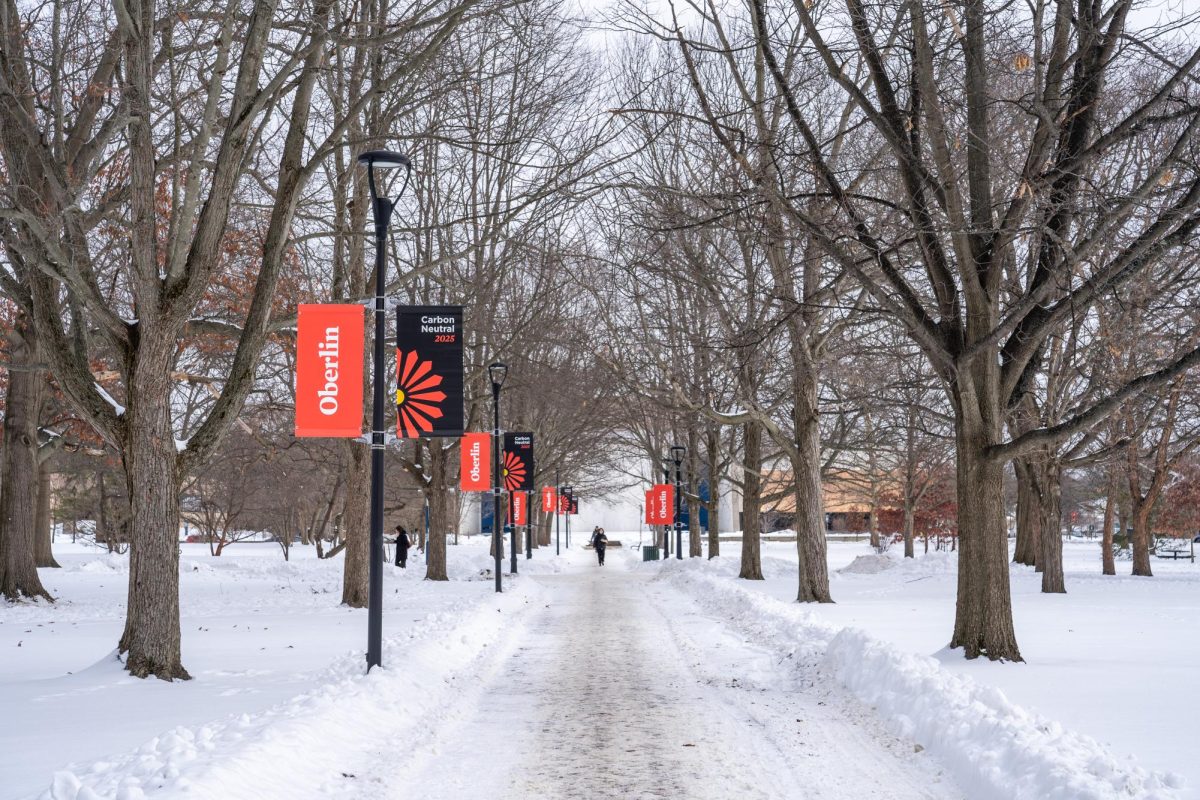
Over the last few weeks of January, Oberlin saw one of the biggest cold snaps in recent years, bringing below-freezing temperatures, hazardous conditions, and around 12 inches of snow all across the town. The severe weather led Oberlin City Schools to close several days and the City and College to adjust facility services to prioritize resident and student safety.
In an email to the Review, Jeff Baumann, Public Works director, said that the main dangers are road and sidewalk conditions. Their operational aim is “safe streets at safe speeds.” Another concern of his is ensuring that all residents find relief from the cold. Baumann noted that extremely cold weather might lead people to utilize dangerous, makeshift heat sources such as ovens or space heaters with extension cords.
“Every division and department is affected to some degree,” Baumann wrote in an email to the Review. “Our Buildings & Ground Division manages the sidewalk clearing contract for downtown. They also clear the roads at Westwood Cemetery as well as the sidewalks and paths at our parks. Water has responded to water main breaks at four locations this winter.”
Oberlin Fire Chief Robert Hanmer expressed worries about frostbite, as well as frozen water lines that could render a fire hydrant inoperable or, as in the case at Stevenson Dining Hall on Sunday, rupture inside buildings.
“We were fortunate that our community heeded the warnings ahead of time, so our call volume was actually down during the storms,” Hanmer wrote. “We also planned for power outages and had warming shelters identified within the community and neighboring communities in case we had to address the need to provide shelter and food.”
Hanmer described how the snow also affected Emergency Medical Services. Many residents who needed an ambulance were not able to clear their driveways and sidewalks. The Oberlin Fire Department used their plow truck to clear the driveway and shoveled sidewalks in order to get a cot inside to a patient.
Oberlin City Schools were also affected by the cold snap, and schools were closed on Friday, Jan. 23, Monday, Jan. 26, and Tuesday, Jan. 27.
Sheriff emergency levels, wind chill and snow advisories, state alerts, and local road conditions were just a few of the meteorological sources that District Superintendent Dr. David Hall kept a careful eye on, according to Melissa Linebrink, communications specialist at Oberlin City Schools. In an email to the Review, she stated that Hall also physically drove the roadways when necessary to evaluate automobile and bus safety.
“While remote learning was used during the COVID-19 pandemic, it required significant resources to ensure equity,” Linebrink wrote. “Those federal supports are no longer available, and not all students currently have reliable access to technology or internet service.”
Linebrink mentioned that some of the bus stops where students wait were covered in snow, some by City of Oberlin plows. Starting Feb. 2, Oberlin City Manager Greg Holcomb has been working with Dr. Hall, as well as the Transportation department, to find a solution. Additionally, some sidewalks that were not accessible have been cleared for the students.
While many students were not on campus during the height of the cold and snow due to Winter Term, the extreme weather did disrupt some College operations.
“Whenever there is a snowstorm or adverse weather, the Office of Residence Life and Auxiliary Services maintains ongoing communication with campus partners, including Facilities Operations and Campus Safety, to ensure we are prepared,” Assistant Vice President and Dean of Residence Life and Auxiliary Services Mark Zeno wrote in a statement to the Review. “We provided updates and reminders to students about keeping windows and doors closed, and encouraged them to report any issues to Campus Safety immediately. We also work with Campus Safety to remain aware of any update from the City or county.”
As Oberlin continues through the winter months, City officials, school administrators, and campus departments say they will remain alert to changing weather conditions.
“There have been winters like this in the past,” Hanmer wrote. “But it has been a few years since there has been such a long period with snow on the ground and extended cold snap.”