On Friday, Aug. 29, as tables lined the walkways of Wilder Bowl with colorful posters and mountains of QR codes, new and returning students browsed through the offerings of more than 60 student-taught courses. As a part of Oberlin College’s pursuit of autonomous education, the College gives students the opportunity to teach or participate in a semester-long course through Oberlin’s Experimental College. The Experimental College was founded in 1968 with only five courses, and by the ’80s, it was offering more than 50 courses. Since then, ExCos have remained a prominent part of the academic environment and the campus’ creative culture. The Experimental College functions as both a student organization and an accredited division of the College that allows students to receive college credits for their participation in the classes. ExCos not only showcase a variety of academic subjects, but a unique view into the topics that students feel compelled to share with their peers. Driving these ExCos are conversations that students want to be having that they are bringing to classrooms themselves.
There were three excos that caught my attention.
BadArtCo, taught by College fourth-year Audie Wilson, is a class that discusses and analyzes unconventional art. Naturally, most Oberlin art classes focus on outstanding and well-celebrated pieces of the art world, but this class asks what can be learned from the “real stinkers” (per the syllabus) and rejects of artistic expression.
For Wilson, an Art History major and a gallery guide at the Allen Memorial Art Museum, this ExCo is a career-focused interest and an opportunity to practice working in arts education. The course covers discussions of “camp” — its kitschiness and fame, ugly building architecture, horrendous fan art as a product of the digital age — and other forms of controversial art. The class culminates in a gallery walk showcasing student artwork.
BadArtCo takes a particular interest in Oberlin-specific artworks. Wilson described a walking tour, which takes students to different architectural and artistic landmarks across the campus during week nine of the course.
“Did you know that we have a campus spike pit that hospitalized a student in 1984?” the syllabus reads.
Wilson explains that outside of the Allen is a covered art piece by Mary Miss from 1973, consisting of a 7 x 7 foot pit in the grass with layers of wood lattice sticking out from the walls of the pit, which — given its accidental hospitalization of a student —warrants some discussion.
Wilson first participated in BadArtCo as a student in the fall of their second year. BadArtCo was first established by Henry Wahlenmayer, OC ’23, who aimed to question the grounds of popular taste and the successes of contemporary art within the sublet of Oberlin’s campus. At a school as opinionated and taste-sensitive as Oberlin, these discussions of artistic quality become particularly rich.
“Oberlin art history is really specific and strange because oftentimes the artists here and the artists we host are boundary-pushing people who create spike pits on college campuses,” Wahlenmayer said (“BadArtCo Gallery Show Questions Mainstream Values of Art,” The Oberlin Review, May 5, 2023). “There was a performance artist that visited in the ʼ80s who hung himself naked upside down … Thereʼs just this weird, long history of radical expression at Oberlin. We wanted to kind of tap into that with this class because I think we have gotten a lot more tame as a campus, which is not necessarily a bad thing, but it is kind of fun to provide an atmosphere for people to just do something really wacky and weird, whether thatʼs creating an absolutely unlistenable song or weird performance art.”
As a part of the walking tour, Wilson shows a series of short films recorded by Lena Dunham, OC ’08, who wrote and starred in the HBO series Girls, and who is perhaps the current public face of Oberlin’s legacy of controversial and unconventional art.
Wilson explained that there’s a lot behind what people like and why they like it, why certain things look good and why others don’t. BadArtCo forces students to think about the reasons behind those gut reactions, which are so often at the center of artistic interpretation.
DeathCo, taught by College third-year Bee Herbstman, started out as a club called Let’s Talk About Death. Once a week, Herbstman led a group of students in discussion about what it means to die. Sometimes these discussions were theories of an afterlife or exhilarating near-death experiences, and other times they were deeply personal conversations surrounding people’s biggest fears. As the club evolved, Herbstman began to see the potential it had to bring people together.
“ I’ve made some of my really close friends through Death Club,” Herbstman said. “It attracts such awesome people that are like, ‘Hey, I’m willing to have this really scary conversation with you.’”
Herbstman explained that they have always had an interest in death. Ever since they were a little kid, death seemed to be this overwhelming fear and darkness that they couldn’t get rid of. Herbstman decided the best thing to do was talk about it.
There aren’t very many places that a group of students can get so personal so quickly. Let’s Talk About Death Club is not only unique in providing a space to discuss death, but it brings these discussions to a liberal arts campus where it can feel challenging to navigate conversations of such negativity.
“It’s really hard and scary to be in a place like Oberlin that is so brilliant at fostering creativity and light and have to bring in this darkness,” Herbstman said. “[Maybe] you’ve experienced a loss outside of Oberlin and are unsure how to share that with your friends — it can be hard to hold space for that sadness.”
Herbstman is excited to be offering Let’s Talk About Death Club in the form of an ExCo this fall. Each week includes discussion topics and presentations to facilitate vulnerable conversation. The course starts out with talks about the 27 Club, the Egg Theory, and funeral cosmetology, and ends with student presentations on any death-related subject they feel passionate about. Herbstman asks questions like, “What is your dream life?”, “Do you believe in the afterlife?”, and, “Do you want to have a funeral?”, forcing students to think about how they want to live their lives and why.
“It’s a place to be selfish — which I think people really benefit from,” Herbstman said. “Being able to share those specific things about yourself [in] a space where you’re not asking for comfort, you’re kind of just asking to talk about it.”
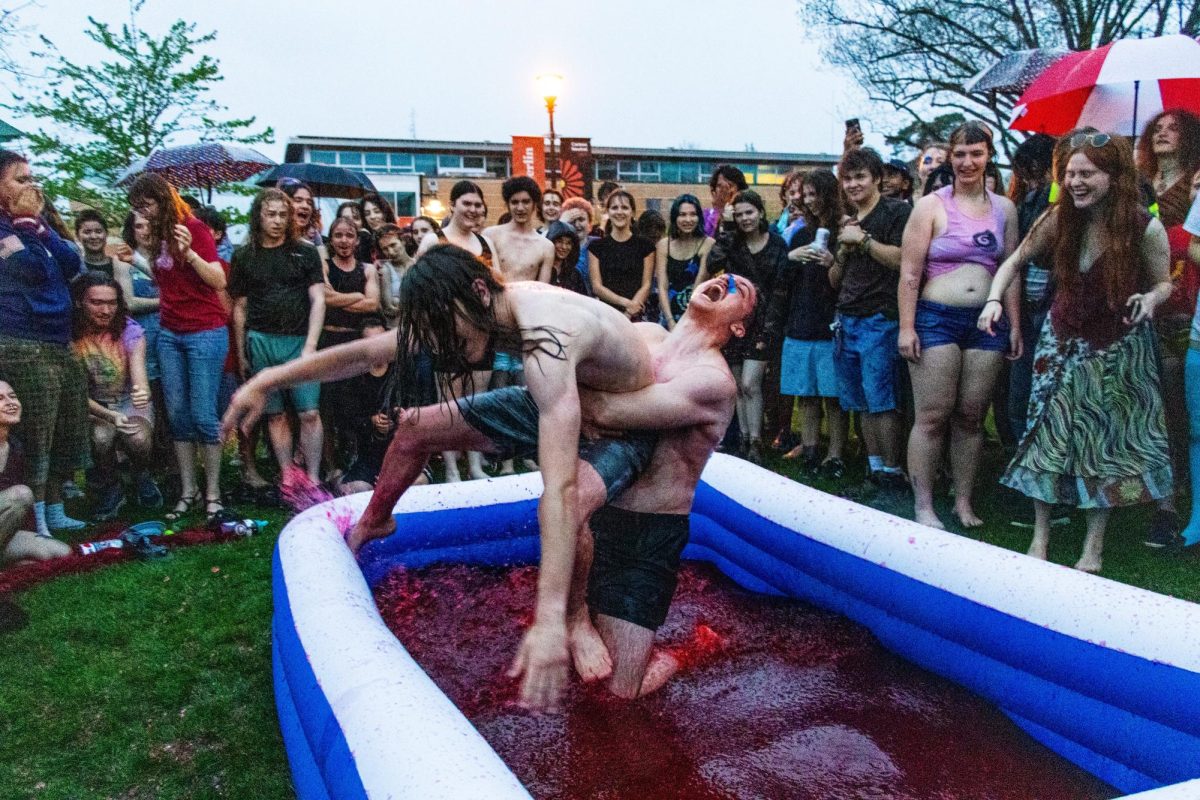
SurvivorCo, taught by College fourth-years Sidney Pasternak and Charlotte Patrick-Dooling, is exactly what it advertises itself to be. The ExCo is a simulated season of Survivor, the reality TV show, on Oberlin’s college campus. Students are divided into tribes, immunity idols are hidden, tree mail is delivered, challenges are hosted, and every week, someone is voted off the island.
“We make it very much like the show,” Pasternak explained. “We record them. We have a production crew, production team. Two or three each time. People with cameras following everyone as they’re having their private conversations. Literally like sticking the phone in their face.”
Both Pasternak and Patrick-Dooling were students of SurvivorCo during their second year before going on to teach the course.
“We didn’t even know each other that well yet,” Patrick-Dooling said. “And then we became friends and roommates and now best friends.”
SurvivorCo takes a look at the strategy of Survivor and the social intricacies of the game in hopes to train students to be Survivor experts. The course starts with an introduction to the game and a breakdown of the show’s rules. Once students are ready to play, the two hours that the ExCo meets for are broken into challenge time, tribal council, and class — all spaced out to simulate the real game. Unlike the majority of Oberlin ExCos, SurvivorCo is a game. It’s hands-on, immersive, and, at times, all-consuming.
“It was so much fun,” Pasternak said, recalling the season she participated in her second year. “It was like the most intense semester. I got really into it — almost too into it — and built such an awesome community around it.”
Last semester, SurvivorCo was able to bring three former contestants of the show to the ExCo classroom. Sandra Diaz-Twine, Matt Blankinship, OC ’17, and his partner Frannie Marin all Zoomed into the classroom to talk about their time on the show.
“[Sandra] came in via Zoom, and she talked about her season, and she talked about all the people she played with,” Pasternak said. “She told us drama that we didn’t see on the show, and everyone got to ask questions.”
Pasternak explained that if you’re a fan of Survivor, you’re a fan of Sandra. She is the first two-time winner and “known as the Queen of Survivor.”
Despite SurvivorCo taking the form of a competitive game, the team-building nature of the course creates a space for Oberlin students to meet new people and create lasting friendships.
“You’re all on a team together and playing this game that most people have grown up watching,” Patrick-Dooling said. “So it’s a great way to find people that have this similar love for a silly reality show, but then you get to see each other every week.”
At the core of Oberlin ExCos is the identification of something students are not getting from their Oberlin classes. Students see that something is missing, whether that be the chance to share a bad piece of music and force a class full of students to listen, or to ask a question about dying that you’ve never said out loud before, or to compete as best you can on a college campus for the chance to win a Survivor simulation.
ExCos are about students taking their learning into their own hands — for whatever purposes — giving the courses their best shot, and seeing what can come of it. There are discussions to be had, stories to share, and games to play.
 Loading...

 Reload document
  Open in new tab